Wobbling Ceiling Fan
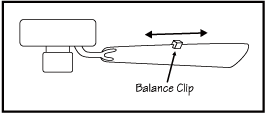 When properly installed and balanced, a ceiling fan should not wobble excessively. Make sure your fan has been mounted properly; there should be an electric box or special bracing to support the fan’s weight and movement. See Figure to the right..
You may be able to stop the wobble by switching blade positions and balancing the fan (see below). Contact the manufacturer of your fan for specific instructions, and ask if a balancing kit is available.
Typical balancing instructions:
1. Check that the fan is properly installed and that the blades are securely attached.
2. Run the fan on high speed (set to downdraft) and observe the wobble. Stop the fan; switch positions of two adjacent blades. If this improves the balance of the fan, leave it as is and use balancing weights.
3. With the fan stationary, attach the manufacturer’s balancing clip on the leading edge of one blade, halfway between the outertip of the blade and the attachment bracket. (A balancing clip, available from most fan manufacturers, is a small plastic weight that firmly clips to the blade.)
4. Run the fan on high speed, set to downdraft, and observe the wobble. Stop the fan; move the clip to the next blade. Again run the fan and observe the wobble. Repeat this for all fan blades.
5. Move the clip back to the blade where you noticed the least wobble. This time, attach the clip to the leading edge of the blade near the blade bracket. Run the fan and observe the wobble. Stop the fan and move the clip outward toward the end of the blade in small increments until you find the position where the fan runs best.
6. Attach a permanent balancing weight on the blade next to the clip. (Weights are often self-stick lead strips provided by the fan manufacturer.)
7. Remove the clip and run the fan. If the wobble was not completely corrected, you may be able to further improve the balance by repeating the above steps and adding more weights.
Doorbell Problems
Don’t be afraid to try to repair the doorbell. All of its parts are low voltage—12 to 24 volts—and can’t really hurt you. However, you should not attempt to repair or replace the transformer for the unit, which will be located in the basement or near the main power panel. It converts a 110-volt supply to 12 or 24 volts.
Most often, the chime unit consists of an electromagnetic plunger that strikes a chime when activated—one sliding movement (and one chime) for the rear door and two movements for the front door’s double chime.
Some door chimes consist of a low-voltage buzzer or a vibrating hammer on a bell. Others have huge chimes and complicated parts best left to a service company.
If the doorbell thumps or hums when you press the button, you need to clean the chime and plunger.
If pressing the button doesn’t trigger any sound, the button itself is probably at fault. The doorbell button is the most common source of problems because of its exposure to weather. For a button that’s flush with the wood trim, slip a screwdriver or putty knife under the edge to pry the button out of its hole. If the button is screwed to the frame, remove the screws.
Now you can see the low-voltage wires. If they are loose or broken, this could be why the doorbell isn’t working. See Figure below.
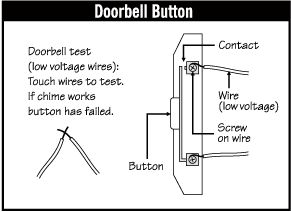 If the wires look okay, disconnect their ends and touch them together to complete the circuit. If the doorbell rings now, you have found the problem—a bad button. You can easily replace the button with a matching button from the hardware store.
If the doorbell does not ring when you manually complete the circuit, the problem is in the chime or transformer.
Check the chime: remove the cover, and take a peek at the chime. Make sure it is level. Vacuum away any dust. You will see a round plunger that needs to move freely in the magnet surrounding it. Look for broken parts or damaged brackets.
After you have checked these items, the next step would be to use a voltmeter to analyze the transformer and wiring. This is a task you may wish to leave to a professional because it involves working with 110-volt power.
Or, for about $20, you can buy a new battery-operated chime/button set that needs no wires. The button is mounted anywhere within 100 feet of the chime. This is a great option when wires are damaged.
Removing Broken Light Bulbs
Sometimes, especially on exterior light fixtures, the glass bulb breaks away from the metal base. There is no best way to remove the base from the fixture, but here are several options.
Before replacing an exterior light, purchase a higher quality bulb with a brass-plated or copper-plated base that will not rust. You could coat the threads with a special dielectric grease available at automotive stores. Dry lubricant, Permatex Anti-Seize, and Vaseline will also work.
To remove the broken base, first make sure the power is off. Wear eye protection. Protect the immediate area from broken glass that may remain on the base. I like to use a needle nose pliers to grab the metal rim of the bulb and twist it. You can also jam the nose of the pliers into the base of the bulb to get a grip. Sometimes opening the pliers inside the metal threads will give you a grip.
If all else fails, use the needle nose pliers to collapse the metal threads until you can remove them.
Folks have phoned my radio show with the following suggestions for removal:
-
Use your fingers, protected by heavy gloves.
-
Use a fuse puller the same way I use a needle nose pliers.
-
Jam into the broken base and turn with:
-a large cork
-a wooden ruler
-a wad of white bread (perhaps you need some really heavy Italian bread
– a potato
-a trimmed paint-stirring stick
Patio Screen Door Sticks and Rubs
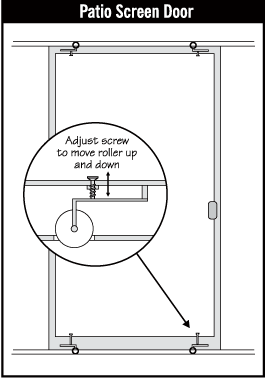 Almost every sliding patio screen door in the world sticks, because few homeowners know they can adjust the rollers that run in the track. You still need to keep the track clean, but adjusting the rollers is the key.
Look at the base of the door; you will see two small Phillips screw heads. They will be above the frame or in the side of the door, near the bottom. Tightening these screws lowers the rollers and lifts the door so the door rolls on the rollers without rubbing the frame. See Figure to the right..
Most doors have a similar roller adjustment for the top rollers. If the door is tight or bound in the frame, loosen these top screws to allow the door to be raised when lowering rollers and screws. Don’t adjust the door to the point that it’s squeezed between the top and bottom frame.
When you adjust the rollers, clean the track. Then spray a light lubricant on the frame and track.
Bathroom Paint and Mildew Problems
If your bathroom has problems with moisture, mildew and peeling paint, an exhaust fan is the best solution. You could have a fan installed in the ceiling or, if that’s not practical, perhaps you can put a fan directly in an exterior wall.
Reduce bathroom moisture problems by wiping down wet surfaces after a shower and removing wet towels. Keep the bathroom door open after a shower. Consider using a small fan to circulate air into the hall.
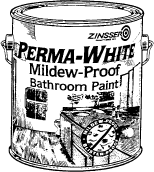 You can also use a special paint that resists mildew and peeling. First, kill existing mildew with laundry bleach and water. Scrape away any loose paint, and sand the surfaces smooth. Spackle as needed. Then paint with Zinsser brand Perma-White Bathroom Wall and Ceiling Paint. This is a self-priming paint, so apply two coats. See Figure to the left.
Zinsser Perma-White is a white semi-gloss paint that can also be tinted. I have used it for several years with great success. It is guaranteed to resist mildew and peeling.
Proper Venting of a Fireplace
The draft problem with most fireplaces in tightly-built homes is that the fire lacks sufficient air for combustion unless a window is open. Sometimes this produces smoke indoors. Fireplaces in older homes didn’t have this problem because leaks around windows, doors and framing provided plenty of air for combustion.
A fireplace with an inadequate air supply can be dangerous. As a fire is starting or going out, it may back up dangerous carbon monoxide into your home. A fire with a strong draft can also interfere with the natural venting of a gas-fired water heater or furnace, causing a backdraft of combustion fumes into the home. Any gas-burning appliance vented by gravity up a chimney can have such a problem.
One good solution is to install small fresh-air vents that bring outside air directly in the firebox. A qualified brickmason, fireplace contractor, or chimney sweep must install such a system; it is definitely not a do-it-yourself project. The vent must penetrate an outside wall and the side or front of the fireplace. The vent may also need to be combined with fireplace doors. See Figure below.
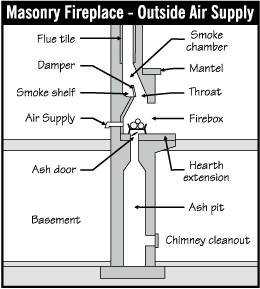 Remember that most natural fireplaces are heat losers when operated in cold weather. Most of the heat goes up the chimney. Fireplaces do work well at removing excessive moisture levels in the winter because they draw lots of air into your home for ventilation (provided a window is open!)
Gutter Leak—a Quick Patch
For quick repair of small holes in the rain gutters, try gutter repair or flashing tape. It’s available in most hardware stores and is manufactured by several companies. This thick aluminum foil tape uses a mastic-type adhesive that’s almost like thick tar. The tape comes in short rolls either 2″or 3″ wide and costs just a few dollars.
To repair the gutter, clean away debris with a wire brush. Wash the area. Once it’s dry, apply the tape, rubbing it well into the hole. The aluminum facing on the back side allows you to rub the tape securely onto the gutter. The foil also protects the patch from sunlight. The adhesive of the tape is thick enough to fill small holes and seams. This repair can easily last several years.
Black Stuff Growing on the Roof
If your roof has light-colored shingles, you may see black streaks on them, especially on the north side. The problem is caused by mildew or fungus growth. There is less sunlight on the north side, so the roof stays damp. Mildew loves a damp surface.
The best way to prevent this algae growth is to provide sunlight and natural ventilation to dry the roof. Obviously, this is not always possible. At least keep all tree branches and leaves about 4 feet away from the roof.
Short of replacing the roof, there is no good quick fix. You could try killing the mildew with a strong solution of laundry bleach and water. Spray or brush the solution on the roof and wait until the areas turn lighter. Then rinse well. You could also use a mildew wash that is sold in paint stores for washing painted wood siding.
Several cautions about using bleach: protect yourself, the gutters, and plant materials. Spilled bleach solution can kill grass and bushes. Use eye and skin protection. Do not walk on the roof while cleaning; it will be slippery and dangerous. Work from a ladder or use other special equipment. Flush the gutters and metal flashing well to prevent damage.
I suggest you hire a professional roofer for the cleaning. You can also purchase a product called Shingle Shield, which consists of zinc strips that are placed under the shingles near the peak of the roof. The zinc reacts with rainwater to produce a chemical that prevents the growth of fungus and mildew. Again, consult a professional roofer. Although the product inhibits the growth of new algae, it may not remove existing algae.
If you ever plan to replace the roof or build a new house, keep in mind that several shingle manufacturers offer shingles with a built-in mildew-resistant chemical.
Peeling Varnish on Front Door
Many homes feature a beautiful wood front door that is stained and varnished. In time, though, the varnish begins flaking and peeling, especially if there’s no storm door.
Sunlight is the culprit. Ultraviolet (UV) rays attack the cellular structure of the wood under the varnish, giving it a “sunburn.” Varnish can’t stick to damaged wood. UV rays also damage the clear finish.
The best solution is to paint the door. Paint has coloring pigment that blocks UV rays and protects the wood. But if you really like that stained and varnished look, it requires a little work.
First you must sand, scrape or strip the damaged finish. Where the finish is in good condition, you must sand and roughen the surface. If the color of the wood has changed, you will need to stain the door before varnishing.
How far you go with the refinishing depends on the condition of the door. If more than 25% of the finish is damaged, your best bet is to chemically strip the door and start with bare wood.
For a final clear finish, look for a UV-resistant varnish (often called spar varnish or marine finish). This finish is expensive and may only be available in a gloss formula. Follow the specific instructions for your varnish, and don’t forget to finish all six areas of the door (front, back, top, bottom and sides).
A final option would be to install a storm door to protect the wood door. There are attractive storm doors available that are mostly glass so your wood door can still show through.
Opening the Garage Door During a Power Outage
Let’s say you’ve got an automatic garage door opener. It’s a great convenience, one you take for granted…until the power goes out. Now what do you do?
Your door opener came with an emergency release. This allows you to disconnect the door from the automatic opener unit and open the door manually. The release is a lever attached to the track and door arm connection. See Figure below.
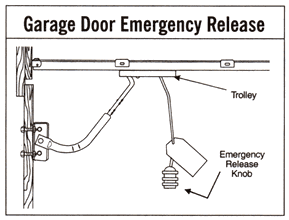 It’s a good idea to test this emergency release before you need it, just to make sure it works properly. If you are confused by the procedure even after reading the following instructions, have someone show you how the release operates.
Start with the door closed. This is very, very important. If the springs are not adjusted properly, a door released in the up position may crash to the ground. Open the door manually. You should only need to apply a few pounds of lift, and the door should almost balance at any point as you raise and lower it. If you must use excessive force to open the door or if it closes very quickly, the balancing springs need to be adjusted.
These springs have a tremendous amount of force, so have any necessary adjustment done by a professional. Sometimes the cable and pulley mechanisms also need adjustment or replacement.
If you have a detached garage without a service door (an ordinary-size door that provides alternate access without using the overhead door), you will be locked out of the garage when the power is off and the garage door is down. You need to find the special lock that releases the door from the outside. Hopefully, you door will have this feature – if not, you should add the release.
 Find a circular lock at the top panel of the garage door, near the center, where the door connects to the operator track. See Figure to the right. Open this lock and pull the attached cable through the opening. The cable attaches to the release that detaches the opener. You can now open the door manually.
Clean and Polish Brass Hardware
Real polished brass finishes on hardware and plumbing fixtures are preserved by the factory with a coat of clear lacquer finish. The lacquer prevents oxidation and tarnishing. Most of the shiny brass or antique brass finishes we see today feature a plated or painted finish, not real polished brass. You will find real polished brass only on very expensive hardware and old hardware.
If your fixtures have real polished brass, you can preserve the finish. First you must meticulously clean the surface with a cleaner or buffing compound. You can also clean and polish brass with 0000-grade steel wool and a paint stripper.
Once the brass is polished, apply a high-quality, non-abrasive, polymer-based car wax. If you prefer a more durable finish, apply lacquer or exterior polyurethane sealer. Wipe down the surface with lacquer thinner, and handle the surface only with clean cloths. Fingerprints contain skin oils that can damage the finish. After the surface is clean, apply the clear coating.
If your fixture has a brass finish with a polished, clear finish, don’t use strong or abrasive cleaners. Instead, apply a coat of paste wax or automotive wax or a product like Faucet Bright to polish and protect the surface.